How to Bid Residential Landscaping Jobs (Without Lowballing Yourself)
A practical framework for bidding residential landscaping jobs — how to run the walk-through, what to charge, and how to quote without leaving money on the table.
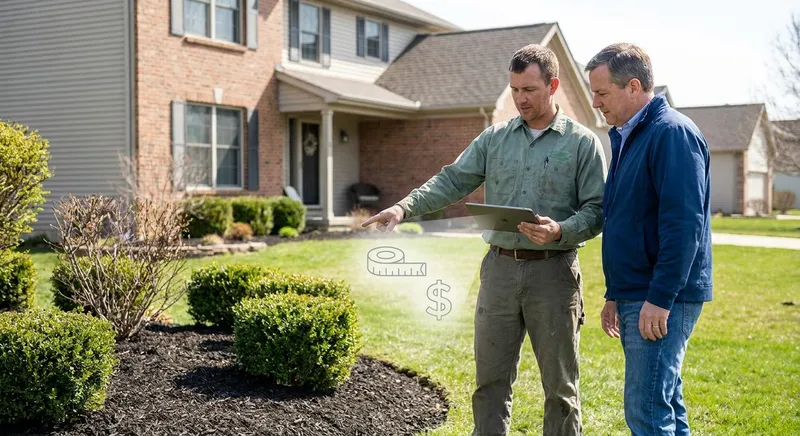
Table of Contents
A homeowner calls asking for a quote on a one-time yard cleanup. You drive over, walk the property, they point at three overgrown beds, a pile of fallen branches, and a back fence line that hasn’t been touched in two years. They say “what would this run?” and wait for a number.
This is the moment most residential landscapers mess up their pricing. They either throw out a too-low number on the spot to avoid seeming expensive, or they freeze, say “I’ll email you an estimate,” and then spend two hours at home agonizing over a number the homeowner forgot about by dinner time.
Neither of those paths produces a profitable job and a happy customer. Here’s the framework that does.
Residential bidding is different from maintenance contracts and hardscape
Before the pricing, a clarification that matters: residential one-off or project-based bidding is its own thing. It’s not:
- Weekly/monthly maintenance pricing — those are recurring contracts with predictable scopes. Different math, different rhythm. For that, see how to price landscape maintenance contracts.
- Commercial bidding — RFPs, insurance requirements, multi-year terms, property managers. Very different sales cycle. If that’s your target, start with how to get commercial landscaping contracts.
- Hardscape installation — patios, walls, walkways. Higher-ticket, more materials-heavy, longer install windows. Pricing framework for that work lives in how to price hardscape jobs.
Residential one-off jobs are the middle of your book: spring/fall cleanups, one-time mulching, brush clearing, tree/shrub installs, sodding, edging renovations, re-landscaping a single bed. Individual jobs typically run $400-$5,000, take a day to a few days, and the homeowner expects a quote within 24-48 hours of your walk-through.
The bids don’t have to be artistic. They just need to be accurate, fair, and fast — in that order.
Step 1: Run a real walk-through (not a 5-minute glance)
The biggest residential bidding mistake happens in the first ten minutes. A landscaper shows up, walks the yard with the homeowner, nods, says “yeah we can do that,” and leaves with a vague mental picture of the scope.
Then three weeks later on job day the crew shows up to “clean up the backyard” and discovers two tons of brush behind the shed that nobody mentioned, a chain-link fence buried in vines, and a neighbor’s dog that runs through the work zone every 20 minutes.
A real walk-through takes 20-30 minutes and covers:
The full property — not just what the homeowner points at. Walk the perimeter. Check behind outbuildings. Look at the side yards nobody uses. What the homeowner thinks is “just the front beds” often turns out to include hidden side strips, tree rings, and a gate area.
Access. How will the crew get equipment in? How far from the truck to the work area? Is there a fence that needs a gate unlocked? Is the dog situation going to cost you 30 minutes a day managing it?
Debris removal. What volume of waste will this job generate? Is there a chipper needed? How many dump runs? Where will you stage brush before hauling? Residential homeowners often assume debris removal is free. It isn’t.
Known unknowns. Sprinkler heads buried in overgrowth, invisible fence wires, recent plantings the homeowner wants preserved, utility markings. Ask. Explicitly. “Are there any irrigation components, invisible pet fences, or buried lines we should know about?”
Photos. Take them yourself. Five to ten phone photos from different angles. You’ll thank yourself when you sit down to price the job and can’t remember if the bed along the driveway was 20 feet long or 40 feet.
Step 2: Build your price from labor hours up — not from the homeowner’s face
The second big residential bidding mistake: pricing based on how much you think the homeowner will accept. This is called “reading the customer” and it’s how you end up underpricing a job by 30% because the homeowner looked at you skeptically when you said “three crew-days.”
The honest approach: estimate the job in labor hours, multiply by your fully loaded billable rate, add materials and disposal, add a contingency, and that’s your price.
Estimating labor hours
For residential jobs, most landscapers eyeball hours and get burned. The fix is to break the job into discrete tasks and assign hours to each:
| Task | Typical hours |
|---|---|
| Full spring cleanup (average suburban yard, ¼ acre) | 6-10 crew hours |
| Bed edging and cleanout (per 100 linear feet of bed) | 1.5-2.5 crew hours |
| Mulch installation (per cubic yard) | 0.5-1 crew hour |
| Shrub pruning (per shrub, average size) | 15-25 minutes |
| Tree pruning (small ornamental, no climbing) | 30-60 minutes |
| Brush clearing (per ¼ acre of light brush) | 4-8 crew hours |
| Sod installation (per 500 sq ft) | 4-6 crew hours |
| Debris hauling (per pickup load) | 0.5-1 hour + dump fees |
These are averages. Adjust for your crew speed, equipment, and local conditions. But use them as a starting anchor, not guesswork.
Your billable rate
Your billable crew-hour rate should cover labor, payroll taxes, workers comp, truck, equipment, fuel, insurance, overhead, and profit. For most residential landscaping operations in 2026, that works out to $75-$120 per crew-hour depending on market and crew composition.
If you don’t know your number, calculate it now. Add up monthly labor, truck payments, insurance, fuel, equipment depreciation, overhead, then divide by expected billable hours per month. The result is your break-even cost per hour. Multiply by 1.5-2x for your billable rate.
Materials and disposal
- Mulch: $45-$75 per cubic yard delivered, plus your install labor
- Plants: cost + 40-60% markup
- Sod: $0.60-$1.20 per sq ft depending on grass type, plus install labor
- Dump fees: $30-$80 per truck/trailer load at most municipal sites
Contingency
Every residential bid should include 10-15% contingency for the stuff you didn’t see on the walk-through. Invisible roots in a bed you have to dig. A client who adds a “quick” shrub pruning. An afternoon of rain that cuts your crew’s productivity in half.
Contingency isn’t padding. It’s the difference between breaking even and actually profiting on residential jobs, which have much higher scope-variability than commercial.
Step 3: The on-site quote decision
Back to the moment: the homeowner is waiting for a number. Three ways to handle it, each appropriate in different situations:
When to give a price on the spot
For straightforward jobs under ~$1,500 that you can scope confidently — a basic spring cleanup, a small mulch install, a routine hedge trim — give a price range on the spot. “Looks like $650-$850 depending on how much brush we pull out of that back corner.”
A spot quote shows confidence and closes a surprising percentage of these smaller jobs immediately. Homeowners who get an on-site number book 2-3x more often than homeowners who get “I’ll email you.”
When to hold the price
For larger jobs or jobs with real uncertainty (heavy brush clearing, re-landscaping, anything with material questions), tell the homeowner you’ll have a detailed quote in their inbox within 24 hours. Then actually send it in 24 hours.
The trap is saying “I’ll email you” and taking four days. At that point the homeowner has called two other landscapers and stopped thinking about the job. 24 hours keeps the momentum.
When to ballpark, not price
For complex jobs with scope you genuinely can’t assess in one walk-through (full yard re-design, drainage work, major tree removal), give a ballpark range on-site that’s honest about the spread. “A job like this typically runs $8,000-$15,000 depending on the final design. I’ll get you a detailed quote by Friday after I pull the material pricing.”
The ballpark establishes you’re in their price zip code without committing to a number you haven’t earned. If they gasp at the low end, they aren’t your customer and it’s better to find that out in 45 seconds than after you’ve spent three hours on a detailed proposal.
Step 4: Write the quote so it actually closes
Residential quotes aren’t commercial proposals. Homeowners don’t want 12 pages. What they want is:
A clear scope. Specific, bulleted tasks. “Spring cleanup: debris removal from all beds, edging of all bed lines (~180 linear feet), mulch installation (6 cubic yards), pruning of front hedge, hauling of all debris.”
A single total price. Not line items the homeowner can cherry-pick. One number. The psychology of bundled pricing consistently outperforms line-item pricing for residential work.
A start date window. “We can start the week of May 5th.” Homeowners who see a specific start date convert at higher rates than homeowners who get “we’ll schedule once you approve.”
What’s not included. Anything that might become a scope-creep argument later. “Does not include: irrigation repairs, plant replacements, tree work over 15 feet, or work outside the property lines.”
Terms. 50% deposit, balance on completion is standard for jobs over $1,500. For smaller jobs, payment on completion is fine. Make it explicit.
One way to say yes. A reply-this-email “yes, let’s do it” is often all the booking signal you need. Don’t make the homeowner sign a 4-page contract for a $600 cleanup.
Common residential bidding mistakes to avoid
Quoting “per hour” instead of a flat price. Homeowners hate hourly pricing for project work because they can’t forecast the total. They’ll pick the contractor who gave them a fixed number even if the hourly contractor would have been cheaper. Always quote a flat price.
Forgetting disposal fees. On cleanup-heavy jobs, dump fees can easily run $150-$400. Bake them into the price — don’t add them as a surprise line item after the job.
Underpricing fall cleanups. Fall cleanups are the most commonly underpriced residential job in landscaping. A ¼ acre yard with mature trees can easily produce 10-15 cubic yards of leaves. That’s 4-6 crew hours plus multiple dump runs — a $400-$700 job that everyone seems to quote at $225.
Matching competitor prices without knowing their scope. “The other guy quoted $400” — and you don’t know if their scope included debris removal, how many cubic yards of mulch, or whether they’re licensed and insured. Compete on your value, not their number.
Discounting to close. A homeowner who talks you down 15% at the quote stage is a homeowner who’ll nickel-and-dime you at every step of the job. Either your price is right or it isn’t — don’t split the difference to win the bid.
Skipping the follow-up. Quotes that don’t get a “yes” in 3-5 days need a follow-up. A simple “checking in — any questions about the estimate?” email recovers 15-20% of unanswered quotes. Most landscapers never send it.
The bidding habit that separates profitable companies
Profitable residential landscaping companies track their bids. Every quote goes into a spreadsheet or CRM with: job type, quoted price, closed/not closed, actual hours if closed. Once a quarter they review the data.
Three things fall out of that habit almost immediately:
- Which job types you’re underpricing. Your win rate on small cleanups is 95%? You’re too cheap. Push the price up $100 per job and watch what happens.
- Which job types you’re overpricing. Win rate on planting installations is 15%? Either you’re pricing well above the market or your proposals aren’t communicating the value. Either way, fix it.
- The gap between your quoted hours and actual hours. If you consistently quote 8 hours for a spring cleanup and the crew actually spends 12, you’re not making money — you’re covering payroll. Adjust the estimate up or speed the crew up.
That feedback loop is what converts residential bidding from an art (where you hope you guessed right) into a system. It’s the boring part of running a landscaping company and it’s also the part that separates the operators who build real margins from the ones still wondering why they’re working 70 hours a week with no money to show for it.
Price the work honestly. Deliver what you quoted. Then measure. That’s the whole game.