What Pest Control Companies Are Charging for Mosquito Programs in 2026 (Benchmark Pricing Data)
A benchmark of 2026 mosquito program pricing — per-treatment, monthly, and seasonal rates pest control companies are charging across the U.S. With the math behind the spread.
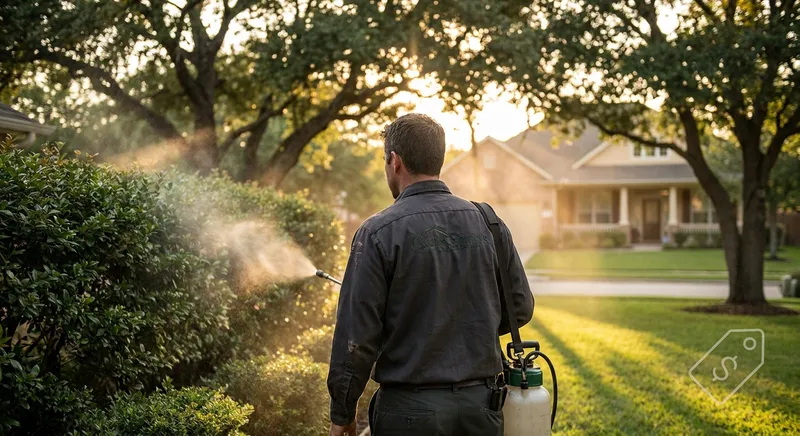
Table of Contents
Mosquito programs are one of the most lucrative add-ons in residential pest control. They’re seasonal, they’re recurring, the chemistry is straightforward, and the customer doesn’t usually shop on price the way they would for a quarterly general pest contract. But because the category is still maturing in a lot of markets, pricing is wildly inconsistent — even within the same metro.
If you’re trying to decide what to charge in 2026, this is a benchmark of what’s actually being quoted. We pulled rates from published consumer pricing guides, regional pest control providers, and industry pricing trackers. Use it as a calibration check, not as gospel — your local market and route density still drive the number.
The headline numbers
Across published 2026 pricing data and consumer cost guides, the spread looks like this:
- One-time spray treatment: $80–$350, with most one-time visits priced $150–$200
- Monthly service (per visit, in-season): $40–$80, averaging $55–$70
- Full seasonal program (5–8 treatments, spring through fall): $300–$600 typical, $350–$500 is the modal range
- Premium / large-property seasonal program: $700–$1,200+
- In2Care or barrier system add-on: $150–$300 per season, layered on top of standard treatments
Source: aggregated from published 2026 pricing data on Angi, HomeGuide, LawnStarter, and Today’s Homeowner.
The big takeaway: the per-visit price has compressed, but the seasonal program total has held. Companies are charging less per visit but stacking more visits into the program, which makes the math better on a route-density basis.
How pricing breaks down by treatment type
Most companies offer two or three of these. The pricing logic differs for each.
Standard barrier spray (synthetic pyrethroid)
The bread-and-butter offering. Backpack or truck-mounted mister applied to vegetation, eaves, and harborage areas. Knockdown is fast. Residual is 21–30 days depending on rainfall and product.
- Per visit: $50–$80 in suburban markets, $70–$110 in coastal / high-mosquito-pressure regions
- Visit frequency: Every 21–30 days during season
- Typical season length: 6–8 visits in the Southeast, 4–6 in the Northeast and Midwest
- Margin: 60–70% gross at typical labor and chemical costs
Natural / botanical programs (essential oil based)
Marketed to households with kids, pets, or organic lawns. Lower residual, requires more frequent visits.
- Per visit: $75–$120 — premium pricing despite cheaper chemistry
- Visit frequency: Every 14–21 days
- Margin: Roughly the same as synthetic, but route density is harder because customers are more spread out
This is the program where you can hold premium pricing if you sell it as a positioning choice rather than as a downgrade. Don’t undersell it.
In2Care or larvicide / source reduction add-ons
A layered approach that targets adult mosquitoes plus breeding sites. Higher upfront cost but stronger results in heavy mosquito areas.
- Add-on pricing: $30–$60 per visit on top of standard treatments, or $150–$300 per season as a flat upcharge
- Best fit: Customers in wooded areas, near standing water, or who’ve complained the standard program isn’t enough
Special-event sprays
One-shot treatments before a graduation party, wedding, BBQ. Low volume but high margin.
- Typical price: $125–$250 for a half-acre lot
- Booked window: 24–72 hours before the event
- Margin: 70%+ — almost entirely labor and 30 minutes on site
What the spread is really about
When you see one company charging $40 a visit and another charging $80 in the same ZIP code, the difference is rarely the chemistry. It’s almost always one of these:
Route density. A company with 14 mosquito stops on a route can profitably price at $45/visit. A company with 6 stops needs $75 just to break even on windshield time.
Whether mosquito is a primary service or an upsell. If you’re already on a property doing quarterly general pest, the marginal cost of a mosquito spray is 15 minutes and a tank of product. You can price the add-on at $35 a visit and still print money. Stand-alone mosquito routes need $60+ to clear the same margin.
Lot size. Most published pricing assumes a quarter-acre suburban lot. Anything over half an acre needs an upcharge, and most companies don’t have a clean per-acre formula. Build one — it’s worth more than another rate sheet.
Local mosquito pressure. In Houston, Charleston, and South Florida, customers will pay $90 a visit and not blink. In Denver, $60 is a stretch. Don’t transplant a Gulf Coast pricing model to a dry market.
Seasonal program structure: where the money is
Single-visit pricing is a trap. The math gets dramatically better when you sell a season at a time.
The standard 7-visit program
- 7 visits, every 21 days, May through October
- Pre-paid or auto-billed monthly
- Typical price: $385–$525 for a quarter-acre lot
- Implied per-visit: $55–$75
- Effective discount vs. one-off: 10–15%
The “premium” 8-visit program with In2Care
- 8 visits + In2Care stations + larvicide treatment of any standing water
- Typical price: $650–$850
- Implied per-visit: $80–$105 once the add-ons are factored in
- Customer mix: 20–30% of the program base usually upgrades when offered
Auto-renewal vs. one-and-done
Companies that auto-renew mosquito programs the following spring (with a 30-day opt-out window) hold roughly 65–75% of customers year-over-year. Companies that re-sell from scratch every spring hold 35–45%. The renewal language in the contract is worth more than any marketing campaign you’ll run.
What you should actually charge
There’s no universal answer, but here’s a practical framework for a small-to-mid pest control operation in 2026:
- Calculate your per-stop cost. Drive time + labor + product + truck + overhead allocation. For most 2-truck shops, this is $30–$45 per stop.
- Decide your target gross margin. 60% is the floor for a sustainable mosquito program. 70% is the goal once route density tightens up.
- Set your per-visit price at 2.5x to 3.5x your per-stop cost. That gives you $75–$157 per visit before discounting for season pre-pay.
- Discount the season total by 10–15% to incentivize the full-season commitment.
- Add a premium tier with In2Care or expanded scope at 1.6x to 1.8x your standard program.
If your current pricing is lower than this, you’re either subsidizing your mosquito customers with margin from your general pest base, or you’re running too lean to invest in growth. Both are fixable.
The mistake most companies make
Pricing isn’t where most mosquito programs leak revenue. It’s the call-handling on the front end.
Mosquito calls are heavily seasonal — the volume between Memorial Day and July 4th can be 4–5x your January baseline. They’re also overwhelmingly inbound from people who saw a neighbor get sprayed, got bit at a backyard party, or just decided last weekend was the last straw. These callers are buying. They are not comparison shopping the way a termite caller is.
If you miss the call, they call the next number on the Google search results. If you answer, you book.
Companies with tight call-answer rates during May–July typically book 70–85% of mosquito quote calls on the first contact. Companies with poor answer rates book 30–45% of the same calls, with the difference walking down the street to a competitor. The pricing strategy doesn’t matter if the phone goes to voicemail in peak season.
A quick gut-check
Before you set your 2026 prices, run these three numbers for your shop:
- What did you charge per visit in 2024? Adjust for chemical cost increases (+8–12% across the major suppliers since 2024) and labor (+6–10% in most regions).
- What’s your route density during peak mosquito season? Stops per hour matters more than stops per day.
- What’s your renewal rate from last season? If it’s under 60%, your contract terms — not your prices — are the problem.
Mosquito programs should be one of the most profitable lines on your P&L. If they’re not, the fix is usually pricing structure (annual auto-renew, pre-pay incentives, lot-size upcharges) rather than the per-visit number itself.
The 2026 numbers above give you the range. Where you land in that range is a function of your route, your market, and how much pricing discipline you bring to the renewal conversation.