The Real Cost of 'I'll Call Them Back Later' in Lawn Care
Every missed callback costs more than you think. The math on how slow follow-up drains revenue from lawn care businesses, and why it gets worse as you grow.
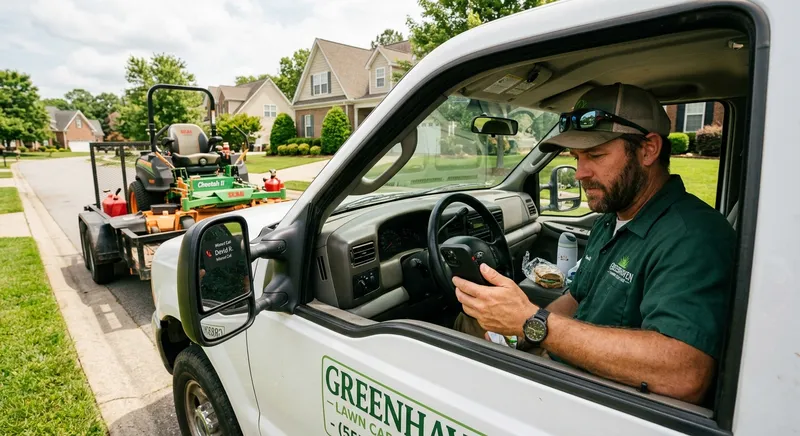
Table of Contents
You’re on a mower. Your phone buzzes in your pocket. You glance at it — unknown number — and think: “I’ll call them back when I’m done with this yard.”
Two hours later, you finish the route, eat lunch, and remember the missed call. You dial the number. No answer. You leave a voicemail. They never call back.
That lead is gone.
You didn’t lose them because your price was too high or your reviews were bad. You lost them because you called back 120 minutes after they were ready to buy, and by then they’d already booked with someone else.
This happens to every lawn care company. The question is how often — and how much it’s costing you.
The Speed-to-Lead Problem
The relationship between response time and lead conversion isn’t linear. It’s a cliff.
Research from Lead Connect found that 78% of customers buy from the first company that responds to their inquiry. Not the cheapest. Not the best-reviewed. The first one that picks up the phone or calls back.
A widely cited study from the Harvard Business Review — analyzing over 100,000 call-back attempts across multiple industries — found that leads contacted within 5 minutes were 21 times more likely to be qualified than leads contacted after 30 minutes. After an hour, the odds of qualifying a lead drop by more than 60x compared to that 5-minute window.
For lawn care, the implications are brutal. Your average customer is a homeowner who just decided they want someone else to mow their lawn. They’re not negotiating a complex contract. They Googled “lawn care near me,” called the top 2–3 results, and went with whoever answered. The entire buying process takes 10 minutes.
If you call back in 2 hours, you’re not late — you’re irrelevant.
What “Later” Actually Costs
Let’s do the math for a typical lawn care operation — a solo operator or 2-crew company doing residential mowing, fertilization, and basic landscaping.
Your call pattern during peak season:
- Inbound calls per week: 15–25
- Calls you miss because you’re mowing, driving, or on another call: 40–60%
- Missed calls per week: 6–15
- Of those, callers who leave voicemail: roughly 20% (the rest hang up and call someone else)
- Callers you reach when you call back within 2+ hours: maybe 30–40%
- Leads effectively lost per week: 5–12
The revenue math:
For a mowing-focused lawn care company:
- Average new recurring customer value: $150–200/month for weekly service
- Season length: 28–32 weeks (7–8 months in most markets)
- Annual value of one new mowing customer: $1,050–$1,600
- Close rate on answered calls: 40–55%
So each lost lead represents $420–$880 in expected annual revenue ($1,050–$1,600 × close rate).
Losing 5–12 leads per week:
- Revenue lost per week: $2,100–$10,560
- Revenue lost per month: $8,400–$42,240
- Revenue lost per season: $58,800–$295,680
Even at the conservative end — 5 lost leads per week at $150/month for 7 months with a 40% close rate — you’re leaving $58,800 per season in annual customer value on the table.
And that’s just year one. A mowing customer who stays for 3 years (the industry average for retained customers, according to NALP member surveys) is worth $3,150–$4,800. Every lead you lose today compounds.
Why Lawn Care Is Especially Vulnerable
Other home service businesses have some natural insulation against slow response times. Lawn care doesn’t.
Low switching costs
A homeowner choosing between lawn care companies faces almost zero friction. The service is similar across providers, the pricing is comparable, and there’s no complex evaluation process. If you don’t answer, the next company on Google is one tap away.
Compare that to hiring a general contractor for a kitchen remodel. That homeowner will wait days for callbacks because the stakes are higher and the options are fewer. A lawn care prospect won’t wait 20 minutes.
Seasonal urgency with a short window
Lawn care demand is compressed into a 3–4 week spring window when the majority of new customers sign up. According to data from the National Association of Landscape Professionals (NALP), most residential lawn care companies acquire 50–70% of their new customers between March and May. Miss calls during that window and you’re not just losing one week’s leads — you’re losing a year’s worth of revenue.
The mowing paradox
The busiest you’ve ever been is also when you’re hardest to reach. Peak mowing season means you’re on properties 8–10 hours a day, running equipment that makes it impossible to hear or answer a phone. Your lead flow peaks at exactly the moment your availability to answer the phone bottoms out.
This is the fundamental problem: lawn care companies are least available to answer the phone precisely when the most valuable leads are calling.
Recurring revenue amplifies the loss
Unlike a one-time service (pressure washing, gutter cleaning), lawn care is built on recurring accounts. When you miss a call and lose a prospect, you’re not losing a $45 mow — you’re losing a customer who would have paid you $150–200 every month for years. The math works against you faster than in almost any other trade.
The “I’ll Call Them Back” Cascade
Slow callbacks don’t just lose individual leads. They create a cascade of compounding problems that affect your entire business.
1. You end up in phone tag
You call back 2 hours later. They don’t answer (they’re at work, they already booked someone, they forgot). You leave a voicemail. Maybe they call back tomorrow — when you’re mowing again. Now you’re playing phone tag with a prospect whose enthusiasm peaked 24 hours ago.
Research from Velocify (now part of Ellie Mae) found that the optimal number of contact attempts for a lead is 6, but most salespeople give up after 1–2 attempts. For a lawn care company owner who’s also the sales team, the operations manager, and the lead mower — you’re lucky if you get to attempt number 2.
2. You overspend on marketing to compensate
When your close rate drops because of slow follow-up, the natural response is to increase marketing spend to generate more leads. But you’re treating a conversion problem with an acquisition solution. You’re pouring more water into a leaky bucket.
A lawn care company spending $1,500/month on Google Ads that converts 25% of leads (because half the calls go unanswered) gets the same result as a company spending $750/month that converts 50% (because every call is answered). The second company isn’t better at marketing — they’re better at answering the phone.
3. Your reviews suffer
Unanswered calls don’t just lose leads — they generate negative sentiment. A homeowner who calls two companies and only one picks up now has a data point: “That first company doesn’t even answer their phone.” They won’t leave a bad review (they never became a customer), but they’ll tell their neighbor. And when that neighbor needs lawn care, your company is already crossed off the list.
4. You can’t grow past a ceiling
This is the big one. Every lawn care company hits a revenue ceiling where the owner is maxed out — running crews, managing routes, handling admin — and the phone becomes the bottleneck. You can’t answer calls because you’re too busy, and you can’t get less busy because you can’t afford to hire help, and you can’t afford to hire help because you’re losing leads to missed calls.
It’s a trap. And it’s the reason so many lawn care companies stall between $150K and $400K in annual revenue. The operation outgrows the owner’s ability to handle sales, but not by enough to justify a full-time office person.
The Voicemail Myth
Many lawn care companies believe their voicemail greeting solves the problem. “Leave a message and I’ll call you back within the hour.”
It doesn’t solve anything. Here’s why:
Most callers don’t leave voicemail. The data is consistent across industries: roughly 80% of callers who reach voicemail hang up without leaving a message, according to research from Forbes and multiple telecommunications studies. For low-stakes services like lawn care, the drop-off rate is likely higher. There’s no reason for a homeowner to wait when the next option is one search away.
The callers who do leave voicemail are already cooling off. By the time they’ve left a message and hung up, the urgency is lower. They’ve also probably called another company. Now you’re not the first responder — you’re the backup option.
Voicemail creates work. Listening to messages, writing down numbers, and calling back one-by-one takes time you don’t have during peak season. It’s a manual process that scales terribly.
“I’ll call you back within the hour” sets the wrong expectation. An hour is an eternity in lead conversion. Promising a 60-minute callback is like promising to be fashionably late to your own sale.
The Problem Gets Worse as You Grow
This might be the most counterintuitive part: the “I’ll call them back” problem doesn’t fix itself when your business grows. It gets worse.
At $50K–$100K revenue (solo operator): You miss calls while mowing, but the volume is manageable. Maybe 8–12 calls per week, and you can return most of them over lunch.
At $100K–$250K (1–2 crews): You’re now managing crews, handling customer complaints, doing estimates, and still mowing some routes yourself. Call volume is 15–25 per week. You miss more, return fewer, and the revenue impact starts compounding.
At $250K–$500K (2–4 crews): The business now generates 25–40 calls per week. You’re doing less field work but more management. You might have someone in the office part-time, but they’re also doing invoicing, scheduling, and ordering supplies. Calls fall through the cracks routinely. You’re losing $5,000–$15,000 per month in potential new customer value.
At $500K+ (4+ crews): You probably have a dedicated office person — and you’ve now solved the problem by spending $35,000–$50,000 per year on salary and benefits. Which is fine, except they still don’t work evenings, weekends, or holidays. And 30–40% of lawn care leads call outside business hours.
At every stage, the problem either costs you revenue directly (missed leads) or costs you money indirectly (staff overhead). The window where “I’ll just call them back myself” works without significant revenue loss is surprisingly narrow — and most lawn care companies pass through it faster than they realize.
What Actually Fixes This
The core problem is simple: lawn care companies need every call answered immediately, but the people running the business can’t be on the phone while they’re running the business.
There are three realistic paths:
Hire an office person. Works well if you can justify the $35K–$50K annual cost and your call volume is high enough to keep them busy. Doesn’t solve after-hours or weekend coverage.
Use a traditional answering service. Third-party operators answer your calls and take messages. Costs $200–$800/month depending on volume. The quality varies wildly — some services sound professional, others sound like a call center in a different time zone reading a script. Most can take a message but can’t answer questions about your services, check your availability, or book appointments.
Use an AI receptionist. Answers every call immediately, 24/7. Can handle multiple simultaneous calls, answer FAQs about your services, schedule appointments, and capture lead information. Costs $30–$200/month depending on the service. The trade-off is that it’s not a human — though the voice quality and conversational ability of AI receptionists has improved dramatically in the past two years.
The right choice depends on your revenue, call volume, and growth stage. But the wrong choice — at any stage — is doing nothing and telling yourself you’ll call them back later.
Because by the time you do, they’ve already hired someone else.
Related: AI receptionist for lawn care companies | Calculate what missed calls cost your business | How an answering service keeps leads from slipping away