Tree Care Storm Response: How to Be the Company That Gets the Call
A practical guide for tree care companies on storm preparation, emergency pricing, crew readiness, and the operational systems that win storm work before the storm hits.
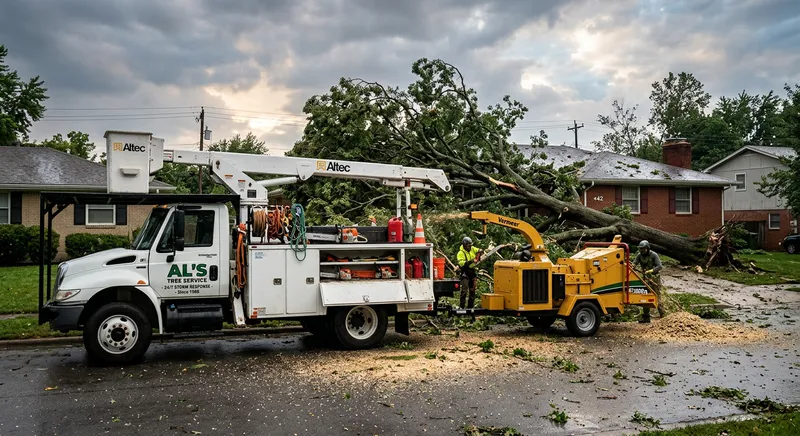
Table of Contents
Storm work is the most profitable — and most chaotic — revenue a tree care company can earn. A single derecho, ice storm, or hurricane event can generate two to six weeks of emergency billable work at premium rates. Some companies make 30–40% of their annual revenue from storm events.
But the companies that capture that work aren’t the ones scrambling after the storm hits. They’re the ones who built the systems, relationships, and operational readiness months before the first tree came down.
Here’s what separates the tree care companies that get the call from the ones that hear about the work after someone else has already started.
The storm work paradox
Storm events create massive, immediate demand for tree work. Downed trees blocking roads, hanging limbs threatening houses, root balls tearing up sidewalks — every property owner and municipality needs help at the same time. The phone rings nonstop for 48 hours.
And then most tree care companies hit the same bottleneck: they can’t answer the calls fast enough, can’t triage the work effectively, can’t mobilize crews quickly enough, and can’t price the work consistently under pressure. The result is a mix of missed opportunities, underpriced emergency jobs, and operational chaos that burns out the crew and the owner in equal measure.
The companies that handle storm events well treat them like a planned operation, not a fire drill. They’ve thought through every phase — before, during, and after — and built repeatable systems for each.
Before the storm: preparation that pays
Build a storm-ready equipment list
Storm work demands different equipment than routine tree care. You need:
- Chainsaws: More of them, plus extra bars and chains. During storm events, you’ll burn through chains faster (dirty wood, embedded debris, tension cuts) and won’t have time to sharpen between jobs. Stock at least 2 extra chains per saw.
- Rigging gear for compromised trees: The trees you’re working on during storm response are damaged, leaning at unexpected angles, and structurally unpredictable. Your rigging setup needs to account for loads and vectors you wouldn’t encounter in routine removals.
- Portable lighting: Storm events mean working early mornings, late evenings, and occasionally through the night for emergency clearances. LED work lights, headlamps for every crew member, and a generator-powered light tower if you do municipal work.
- PPE upgrades: Hard hats with face shields (flying debris from damaged wood), chainsaw chaps for every saw operator (no exceptions during storm work when fatigue increases accident risk), high-visibility vests for roadside work.
- Fuel and fluid reserves: A full storm response can burn 50–100 gallons of fuel per day across trucks, chippers, and saws. Keep a reserve and know your nearest commercial fuel supplier’s emergency hours.
Audit this list annually, before storm season. Replace worn rigging, sharpen or replace chains, test all lighting, and confirm PPE fits every current crew member.
Pre-position relationships with disposal sites
Normal wood disposal works fine for routine operations — you have your regular dump, your firewood customers, your mulch arrangements. Storm events overwhelm all of those channels.
Before storm season:
- Confirm capacity with your primary disposal site. Ask them directly: if a major storm hits and you’re bringing 10 loads a day instead of 2, can they handle it? What are their extended hours during emergencies?
- Identify backup disposal options. A second yard, a landowner who’ll take logs, a municipal green waste site that opens for emergency dumping. Having 2–3 options means you don’t lose half a day waiting in line at a single overloaded facility.
- Negotiate emergency rates in advance. Some disposal sites jack up their tipping fees after storms because demand spikes. Lock in rates before the event, even if it’s just a handshake agreement.
Build the call list before you need it
When a storm hits, property managers, HOAs, municipalities, and utility companies need tree work immediately. The companies on their pre-approved vendor list get called first. Everyone else waits.
Municipal work: Contact your city or county public works department. Ask about their emergency vendor registration process. Many municipalities maintain a pre-qualified list of tree care contractors for storm response. Getting on this list before the storm is the single highest-leverage business development activity for storm revenue.
Utility companies: Utility ROW (right-of-way) tree work is a major revenue source during storm events. Contact your regional utility companies and their contracted vegetation management firms. Ask about emergency response agreements. Some require specific insurance minimums, traffic control certifications, or equipment standards — meet these before storm season, not after.
Property management companies: Large commercial property managers need storm response for their portfolios. Introduce yourself to the 3–5 largest property management firms in your service area. Offer to be their on-call tree care vendor for storm events. A single PM company managing 40 commercial properties can generate $50,000–$150,000 in emergency work from one storm.
HOAs: Similar to property managers, but the decision-making process is slower (board approval). The workaround: get on the HOA’s approved vendor list during a calm period. When the storm hits, you’re already approved and they call you directly instead of soliciting bids while trees are on roofs.
Emergency pricing: how to charge fairly and profitably
Storm work pricing is one of the most mishandled aspects of tree care. Two common mistakes:
-
Underpricing out of guilt. The homeowner has a tree on their roof. They’re scared and stressed. You feel bad charging a premium, so you quote your normal rate. The problem: storm work is harder, more dangerous, more equipment-intensive, and more time-constrained than normal work. Your costs are genuinely higher. Charging normal rates during emergencies means you’re subsidizing the work at your crew’s expense.
-
Gouging. Charging 5x your normal rate because people are desperate is legal in most states (unless price gouging laws apply, which they do in many states during declared emergencies — check yours). But it’s terrible for your reputation. One price-gouging complaint on Google reviews or local news will cost you far more in long-term revenue than the premium you earned.
A fair emergency pricing framework
Time and materials with a storm multiplier. Take your normal T&M rates and apply a 1.3–1.5x multiplier that accounts for:
- Higher risk (compromised trees, energized lines nearby, structural damage)
- Extended hours (early starts, late finishes, weekend work)
- Accelerated equipment wear (dirty wood, debris, high utilization)
- Disposal cost increases
- Mobilization costs (fuel, staging, crew coordination)
Example:
| Component | Normal rate | Storm rate (1.4x) |
|---|---|---|
| Crew labor (3-person) | $225/hour | $315/hour |
| Crane | $250/hour | $350/hour |
| Chipper/truck | $75/hour | $105/hour |
Communicate the multiplier transparently: “Our emergency rates are 40% above standard because of the increased risk, extended hours, and disposal costs during storm events.” Most customers understand this when you explain it plainly. The ones who don’t weren’t going to be good customers anyway.
For municipal and utility work: These contracts usually have pre-negotiated emergency rates, often set by FEMA reimbursement schedules or the utility’s own rate structure. Know these rates before the event so you can bid accurately.
During the storm: triage and mobilization
The first 6 hours
The first 6 hours after a major storm event determine how much work you capture and how effectively you deliver it. Here’s a triage protocol:
Hour 0–2: Assessment and prioritization
- Check on your crew’s safety and availability. Account for everyone.
- Drive your primary service area and assess the scope. How widespread is the damage? What neighborhoods are hardest hit? Are there road closures affecting your routes?
- Check in with your pre-positioned contacts (municipalities, utilities, property managers). Are they activating emergency vendors?
Hour 2–4: Triage inbound calls The phone will be overwhelming. Every call feels urgent to the caller, but not every job is actually time-critical. Sort calls into three categories:
- Priority 1: Immediate safety hazard. Tree on a house (occupants inside), tree on a car with people trapped, tree blocking emergency vehicle access, tree on power lines (refer to utility). These get scheduled first.
- Priority 2: Property damage, no immediate danger. Tree on an unoccupied structure, tree on a fence, large limbs blocking a driveway. These get scheduled within 24–48 hours.
- Priority 3: Cleanup and prevention. Hanging limbs, partially uprooted trees that aren’t threatening structures, general debris. These get scheduled in the days and weeks following the event.
Hour 4–6: Deploy crews Send your most experienced crew to Priority 1 jobs. Assign remaining crews to Priority 2 work. Log every call, every dispatch, and every job — in the chaos of storm response, the companies that keep clean records get paid; the ones that don’t end up in disputes.
Managing call volume
This is where most tree care companies break down during storm events. The owner is in a truck heading to a Priority 1 job while 30 calls come in. The calls go to voicemail. Half the callers hang up and call the next company. By the time you check voicemail 4 hours later, you’ve lost $20,000 in work to competitors who answered the phone.
Solutions that work during storm events:
- Designate a call handler. One person — the owner’s spouse, an office person, a retired employee — whose only job during the event is to answer the phone, triage calls using the priority categories, and log every inquiry. They don’t need to be an arborist. They need a phone, a spreadsheet, and the three-category triage framework.
- Set up an overflow system. An answering service, a shared line with another company (reciprocal agreement), or a technology solution that captures caller info when your designated handler is already on a call. During peak storm response, you might get 5–10 calls simultaneously. No single person can handle that.
- Use a callback script. The call handler tells every caller: “We’ve logged your information and categorized the urgency. A crew will contact you within [timeframe] to schedule the work.” This sets expectations and prevents the caller from calling three other companies because they think you forgot about them.
After the storm: converting emergency work into long-term revenue
The biggest mistake tree care companies make after storm events is treating the work as a one-time windfall. The right approach treats every storm client as a potential long-term customer.
Follow up on every job
Within one week of completing emergency work, call or text every storm client:
- “How’s the property looking? Any other concerns we can address?”
- “Now that the emergency is handled, we’d recommend a full tree assessment to identify other potential hazards before the next storm. Want us to schedule that?”
A post-storm tree assessment is a natural upsell that’s genuinely in the customer’s interest. Damaged trees that didn’t fall during this storm may fail during the next one. Identifying and addressing these risks converts a $1,500 emergency removal into a $4,000–$8,000 comprehensive tree care engagement.
Collect reviews during the gratitude window
Customers are most grateful — and most willing to leave a review — in the 48 hours after you solve their emergency. Don’t wait two weeks. Send a review request the day after the job: “We’re glad we could help during the storm. If you have a minute, a Google review would mean a lot to our small business.”
Storm response reviews are disproportionately valuable because they’re emotional and specific: “They were here within hours of the storm, removed the tree from our roof, and their crew was professional and careful.” These reviews sell your company better than any marketing you could buy.
Document everything for next time
After every significant storm event, hold a 30-minute debrief with your team:
- How many calls came in? How many did we capture vs. miss?
- What was our average response time for Priority 1 jobs?
- What equipment did we wish we’d had?
- What went wrong logistically (disposal bottlenecks, crew coordination, routing)?
- What worked well?
Write it down. File it where you can find it next year. The debrief from your last storm event is the single best planning document for the next one.
The insurance and liability checklist
Storm work carries higher liability exposure than routine tree care. Before storm season, confirm:
- General liability limits. Many municipal and utility contracts require $1M–$2M in general liability. If your current policy is lower, increase it before you need the coverage — trying to bind additional coverage during an active storm event is expensive or impossible.
- Auto and equipment coverage. Storm work puts your trucks on debris-covered roads and your equipment in high-utilization scenarios. Confirm your coverage limits and deductibles are appropriate.
- Workers’ compensation. Storm work is when injuries happen — fatigued crews, compromised trees, unfamiliar job sites, pressure to work fast. Make sure your workers’ comp is current, your classification codes are correct, and your crew knows the safety protocols cold.
- Pollution liability. If a damaged tree you’re removing drops onto a fuel tank, oil line, or chemical storage area, the spill may become your liability. Some policies exclude pollution incidents. Check yours.
- FEMA documentation requirements. If you’re doing storm work for a municipality that will seek FEMA reimbursement, the documentation standards are specific and non-negotiable: detailed time sheets, equipment logs, photographic evidence, GPS data in some cases. Failing to document properly means the municipality doesn’t get reimbursed — and they won’t call you next time.
Building a storm response plan (one page)
Distill everything above into a single-page document your team can reference when the weather turns. Include:
- Emergency contact list: Every crew member’s phone, your disposal sites, your municipal/utility contacts, your insurance agent
- Equipment checklist: What to stage before the storm, where it’s stored, who’s responsible for prep
- Triage categories: Priority 1/2/3 definitions with examples
- Call handling protocol: Who answers, what they say, how they log calls
- Pricing: Storm rate card with the multiplier applied
- Safety reminders: PPE requirements, fatigue limits (no more than 12 hours continuous work), buddy system for hazardous removals
Laminate it. Put a copy in every truck. Review it with the team at the start of storm season. When the event happens, nobody should be improvising the basics.
The bottom line
Storm work is a competitive advantage for tree care companies that prepare for it and an operational nightmare for those that don’t. The difference isn’t luck or proximity — it’s preparation.
The companies that consistently win storm work have done three things before the first tree falls: they’ve built relationships with the clients who need emergency service, they’ve prepared their equipment and crews for high-intensity operations, and they’ve built systems to capture and triage the flood of inbound calls that define the first 48 hours of every storm event.
You can’t control the weather. You can control whether your company is ready when the weather changes. Start building the plan now, while the skies are clear.
Related: AI receptionist built for tree care companies | After-hours answering for emergency storm calls | How one tree care company uses Tinylawn to triage storm damage calls