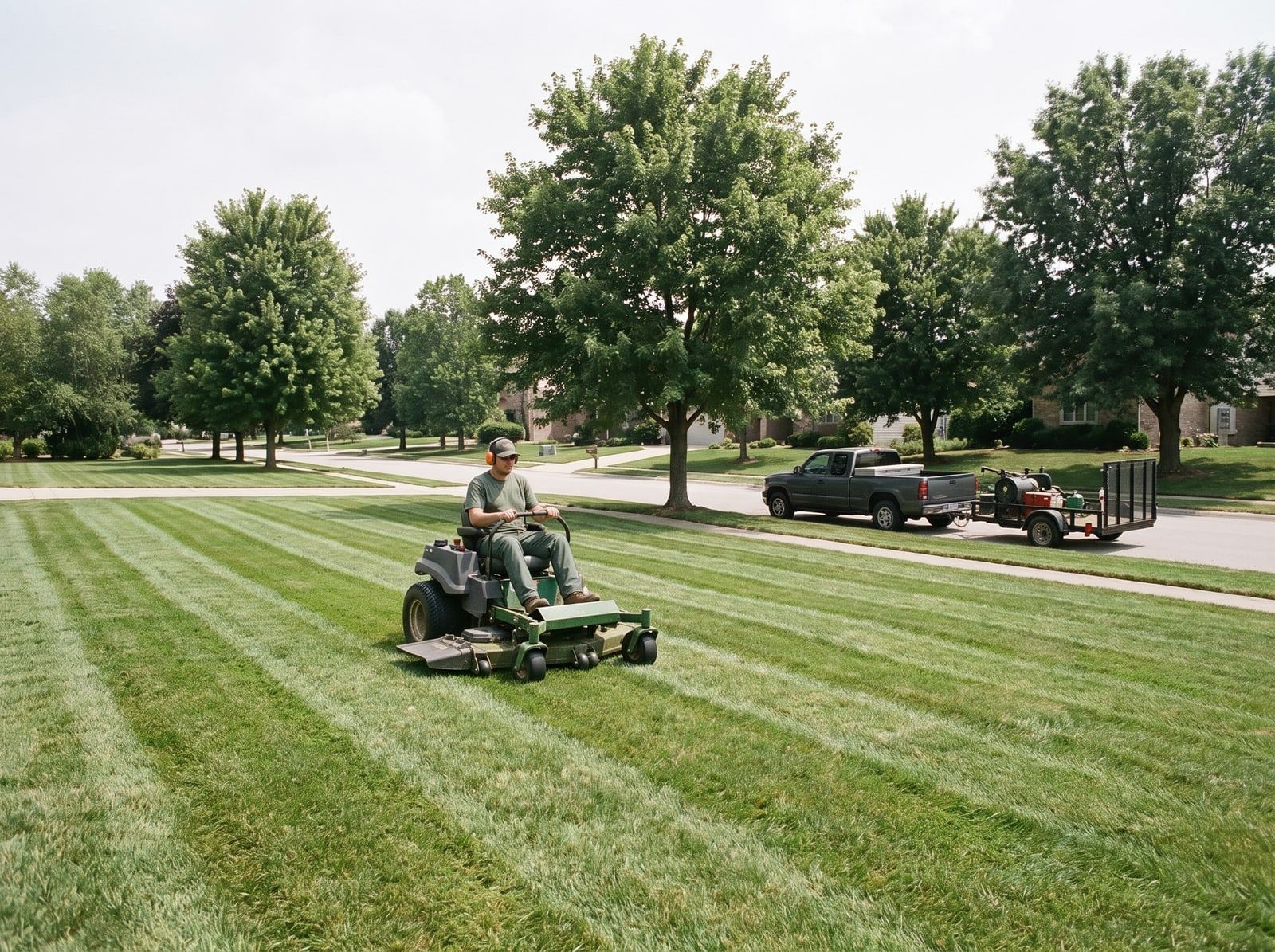


Lawn Care professional working at a customer property

2026 buying guide

Best Appointment Scheduling for Lawn Care

Choose phone coverage around the calls your lawn care business actually receives—not a generic feature checklist.

Start with the operation

The right choice starts with how lawn care calls happen

High volume March-May, steady summer, moderate fall activity. During april-october, the system needs to capture opportunity without pulling your team away from safe, productive field work.

Typical job context

$50-$150 per visit

Peak season

April-October

Common requests

6 examples

Evaluation checklist

What a good appointment scheduling should do

01

Understands Lawn Care intake
It should capture the service, property address, timing, and job details needed for requests such as weekly/bi-weekly mowing, spring/fall cleanup, fertilization.

02

Responds when your crew cannot
High volume March-May, steady summer, moderate fall activity. Look for coverage that matches those real call patterns instead of forcing every caller into business hours.

03

Qualifies before it schedules
The system should follow your service area, job-fit, and intake rules so your calendar is not filled with requests your team cannot serve.

04

Hands off complete context
Recordings, transcripts, summaries, and structured lead details should make the next human follow-up faster and more informed.

05

Fits your existing operation
A good solution should work with your business number and sit in front of the scheduling or field-service software you already use.

Where Tinylawn fits

An intake layer for the phone and tools you already use

Tinylawn handles missed, after-hours, and overflow calls, then gives your team the details to decide what happens next. It does not replace dispatch, route planning, estimating judgment, or your field-service system.

Best fit

Teams that need reliable call coverage, structured qualification, and intake booking without adding front-desk headcount.

  1. 1

    Answer the call

    Give lawn care callers an immediate response during jobs, after hours, and through seasonal spikes.

  2. 2

    Understand the request

    Ask about the service, property, urgency, timing, and other details that determine whether the work is a fit.

  3. 3

    Offer the right next step

    Answer routine questions, collect photos or property context, and book a qualified intake appointment when your rules allow it.

  4. 4

    Prepare your team

    Send the lead, conversation summary, and supporting details to the people and tools responsible for follow-up.

Relevant Scheduling capabilities

Qualified intake appointment booking
Availability and service rules
Customer confirmations
Rescheduling and cancellation support
Lead details attached to the appointment
Handoff to existing scheduling workflows

Common Lawn Care requests

Weekly/bi-weekly mowing
Spring/fall cleanup
Fertilization
Weed control
Aeration
Overseeding

Questions to ask

Frequently asked questions

What is the best appointment scheduling for a lawn care business?
The best option depends on how your phone number, intake rules, and scheduling workflow operate. Prioritize lawn care-specific qualification, reliable coverage during april-october, clear call records, and a clean handoff to your existing tools. Tinylawn is designed around those needs for field-service teams.
What should a appointment scheduling ask a lawn care caller?
At minimum, it should capture contact information, the property address, requested service, timing, and job-specific context. For lawn care, that may include requests such as weekly/bi-weekly mowing, spring/fall cleanup, fertilization, weed control.
Can Tinylawn use my existing business number?
Yes. Conditional call forwarding can route missed, after-hours, or overflow calls from your existing number to Tinylawn. You can keep the number already shown on your website, trucks, signs, and Google Business Profile.
Does Tinylawn replace lawn care scheduling software?
No. Tinylawn is the intake layer in front of your operation. It answers and qualifies calls, books intake appointments, and hands the opportunity to the scheduling, CRM, or field-service tools you already use.