How to Add Snow Removal Services to a Landscaping Business
A winter launch plan: insurance, equipment, contracts, salt, and phones. Use this after you decide snow is a fit, not instead of that decision.
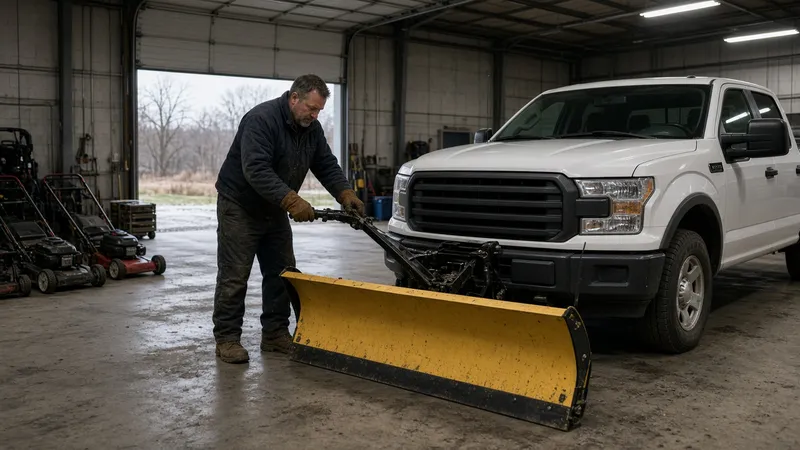
Table of Contents
Adding snow removal to a landscaping business is a 90-day operations project, not a Facebook post that says “now plowing.” The companies that make money on it look boring on paper: insurance bound, lots clustered, salt bought, phones covered. The companies that lose money bought a plow in November and hoped the weather would be kind.
If you have not decided whether snow belongs in the company at all, stop here and read should you add snow removal to your landscaping company. That post is the yes/no. This one is the how, for a winter you can still catch.
What you are actually launching
Snow is not “mowing with white stuff.” Labor is overnight and on-call. Liability is slip-and-fall, not a missed edge. Customers judge you on whether the fire lane is open at 6 a.m., not on whether the mulch bed is crisp.
Write the offer in one sentence before you spend:
“We plow and treat [property types] in [cities], at [trigger depth], with [seasonal / per-push] pricing, and you can reach us during the event.”
If you cannot fill those brackets, you are not ready to advertise.
Step 1: Insurance, contracts, and photos (week 1–2)
Call your agent before the equipment dealer. Ask for snow and ice operations, additional insured certificates for property managers, and whether they will write sidewalks. Many landscaping policies exclude snow until you add it. Plowing uninsured is how a $40,000 season becomes a claim that follows you for years.
SIMA’s 2022 industry impact snapshot, summarized by Turf Magazine, estimated a one-in-six chance of a slip-and-fall claim each season and an average medical claim around $33,000. Customer retention in that research was high (93% year over year) for shops that already operate like contractors. You do not get that retention with handshake lots and no photos. The same report found over half of snow providers are also lawn and landscape companies, so the launch path is common. The failed launch path is also common: plow first, insurance later.
On paper, every account needs:
- Service area map (drive lanes, sidewalks, fire hydrants, piles)
- Trigger depth and whether ice-only visits bill
- Photo or GPS documentation after each event
- Who they call at 2 a.m. (not your personal cell as the only plan)
Property managers who already use you for summer grounds will still bid snow separately if last year’s snow vendor documented better than you do.
Step 2: Equipment that matches the lots (week 2–4)
Match iron to the work you already have a shot at.
| If your summer book is… | First winter gear |
|---|---|
| Residential lawns, 3/4-ton trucks | Driveway plow + walk-behind or compact for sidewalks. Stay off big retail lots. |
| Small commercial mowing (offices, churches) | One properly upfitted 3/4- or 1-ton, 8–9 ft plow, tailgate spreader, sidewalk kit. |
| Large commercial grounds | Do not pretend. Skid or loader with pusher, or subcontract the lot and keep sidewalks. |
Budget the unsexy line items: cutting edges, a spare hydraulic hose kit, winter tires, a covered salt pile. The first breakdown in a storm is not a learning experience. It is a missed contract clause.
Step 3: Pre-sell, then fill gaps (August–October)
Existing commercial landscape clients first. One conversation: “We are taking snow this winter on properties we already maintain. Here is seasonal vs per-push, trigger, and how we document.” You already know the gates and the dumpster pads.
Then cluster. A church two minutes from an office park you already mow is a better second account than a “great lot” 40 minutes out.
Residential fills holes between commercial sites. Door-knock the streets you already mow. Do not build a city-wide driveway business in year one.
Pricing models: flat rate vs per-push. New relationships often start per-push until you know the property. Commercial buyers often want seasonal for the budget. Hybrid (cap plus extra events) saves you in a brutal winter.
Build the list the way off-season snow sales describes. If it is already October, shrink the goal: lock current clients and one dense neighborhood, not 40 new lots.
Step 4: Labor that will answer a 2 a.m. text
Your best mower may refuse snow. Ask now. Pay storm premiums in writing. One person cannot plow, salt, and take property-manager calls for 18 hours.
A simple year-one org:
- Owner or lead on the commercial cluster
- Second truck on residential cluster (or sidewalks)
- Phones handled by someone who is not in a whiteout
Layoff-all-winter and “we’ll see if it snows” is how you lose the crew you need in April. If snow hours will be 20 a week plus storms, say that in September.
Step 5: The phone is part of the snow product
Summer missed-call habits will not survive a storm. A property manager who cannot reach you during the event shops a backup. Two storms of voicemail and the backup is the contractor.
Set this up in October, not during the first squall:
- Keep the Google and truck number.
- Forward when busy, unanswered, and after hours during storm windows. Some shops only forward on forecast nights.
- Intake must get address, lot vs driveway, contract vs one-off, ice vs plow, and a callback number.
- Live transfer of true emergencies (if you use it) starts on Tinylawn Growth, not Pro.
- Test from a second phone while you sit in a running truck. If you cannot hear the greeting over the diesel, neither can a tired caller.
Tinylawn is built as that inbound layer for snow removal. It answers in English and Spanish, captures a job-ready lead, and can request photos by SMS after the call. It does not dispatch plows or replace snow software. Plans start at $49/month (25 calls). Trial is 14 days or 10 calls, no card. Hang-ups, spam, and silent calls do not count.
Storm-night patterns are in how snow companies handle 2 a.m. calls.
First-winter mistakes to skip
- Advertising “24/7 emergency snow” with one truck and no sidewalk plan
- Taking a 4-acre lot because the summer client asked nicely
- No photos (“we’ll remember we were there”)
- Personal cell as the only after-hours number, then Do Not Disturb at 3 a.m.
- Buying salt the afternoon of the storm
- Pricing residential driveways like commercial (or the reverse)
Year one success is not maximum revenue. It is zero ugly claims, crew still speaking to you in March, and a renewal list you can sell in August 2027.