Landscaping Off-Season Prep for 2027: What to Finish Before Spring Hits
A winter checklist for landscapers: equipment, crew, 2027 contracts, marketing with SEO lag, and phones so April does not start at zero.
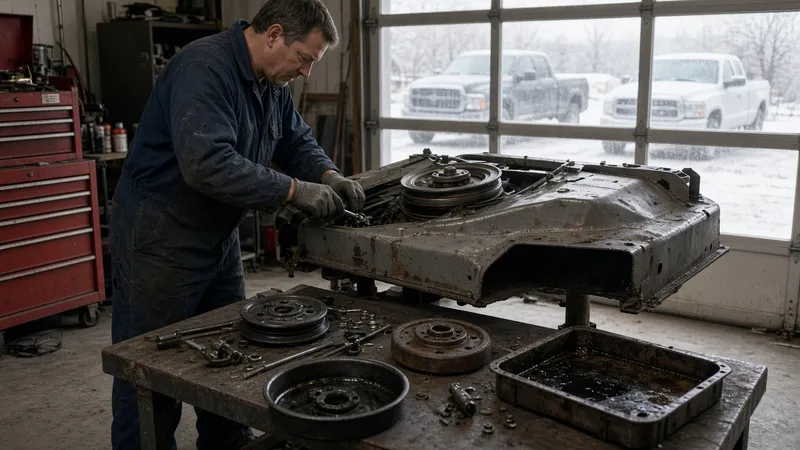
Table of Contents
Off-season prep for 2027 is the work that makes April look like a plan instead of a fire. You still have a window. Early fall is for finishing this year’s money (leaves, lighting, snow sales). Late fall and winter are for the company you want to be next year.
The calendar is not optional. The Bureau of Labor Statistics notes that landscaping-services employment rises rapidly in spring and does not peak until summer. NALP’s landscape industry statistics put the US market near $188.8 billion in 2025. Your shop is a rounding error in that number. Your April is not. The shops that “start marketing when it warms up” are recruiting, bidding, and buying parts in the same two weeks as everyone else.
This is not a vision-board post. It is a punch list. Pair it with the seasonal marketing calendar for channel timing, and with how to handle the spring rush so the prep has somewhere to land.
September–October 2026: finish this year, sell next winter
- Last mows, leaf programs, gutter partners, irrigation winterization: invoice cleanly. AR you let rot in November is February cash-flow pain.
- If snow is in the plan, contracts belong now. See how to add snow and client list before the flake.
- Tell crews what winter looks like (hours, snow, layoff, lighting). Silence is how they take a warehouse job.
November–December: iron, photos, and 2027 numbers
Equipment. The commercial mower guide is still the right chores: decks, oil, blades, fuel, batteries, winterize what will sit. Read commercial mower maintenance. Order the parts that had a six-week lead time last spring. Order them now.
Price list for 2027. Fuel, labor burden, and insurance already moved. A 5–8% maintenance increase with a one-paragraph reason beats a surprise in April. How to price maintenance contracts if the number is still a guess.
NALP’s write-up of the 2025 Financial Benchmark Report is useful context, not a mandate: typical participating companies reported 8.5% sales growth in 2024 (down from a 15.7% inflation-year in 2022), a median 9% increase in contract value per maintenance account, and a median 355 customers. If you have not raised since 2023, you are volunteering margin. If you raise 20% with no letter and no reason, you are volunteering churn. Pick the number your job costing can defend.
Proof. Shoot five honest job photos before the light dies for the year. GBP and the website should not still show 2023 mulch beds.
Books. Know which jobs made money. Job costing is a winter desk job that changes what you bid in May.
January–February 2027: sell spring while everyone else is asleep
This is the marketing window that does the most work for the least spend.
- Early-bird spring cleanup to existing customers (book and, if you can, collect a deposit)
- Annual lawn or maintenance packages for 2027
- Design-build consults so installs happen in April, not July
- Commercial proposals while property managers still have budget attention
Google Ads on “spring cleanup” in February is cheaper than the same click in April. SEO pages you publish in January are late for this April but on time for 2027’s late spring and for 2028. Still publish. Competitors who wait until May donate that lag.
Keep spend honest. How much to spend on Google Ads exists so you do not “stay visible” at summer CPCs in a month with no mowing intent.
Hiring on a winter clock
The seasonal hiring guide is the long version. Short version: reach last year’s good people before Thanksgiving. Interview in January. Do not post “start Monday” on March 20 and expect a crew lead.
BLS is why March hiring is a knife fight. Landscaping employment is already climbing in spring while you are also trying to sell cleanup. NALP has estimated that replacing a skilled crew member can run $3,000–$5,000 in recruiting, training, and lost productivity (off-season route post). Losing a whole crew over winter and rebuilding in April is how spring starts late.
If you cannot offer 40 winter hours, say what you can offer. Certainty beats a vague “we’ll call you in spring.”
Phones: set this up as a 2027 system, not a spring panic
The first warm Thursday will produce the year of calls you remember. That is the wrong week to learn your forward failed, the greeting still says 2025, or overflow dumps to a full mailbox.
Before March:
- Call your own Google number from a hidden cell. Time the rings.
- Decide missed-call vs. overflow vs. after-hours. Start with the coverage comparison.
- Write the five questions your estimator always asks (address, scope, access, photos, existing customer).
- Publish spring windows you are willing to book, including “we are quoting for the week of X.”
Tinylawn is the inbound layer for landscaping: answers 24/7 in English and Spanish, builds a job-ready lead, optional photo SMS, Zapier into Jobber or a sheet if you want. It does not replace your scheduling software. Plans from $49/month (25 calls). Trial: 14 days or 10 calls, no card. Spam and short hang-ups do not count.
Setup while it is quiet is cheaper than setup while 40 homeowners want cleanup “this week.” What to know before you set up an AI receptionist is the landscaping-specific version.
One-page 2027 prep scoreboard
| Area | Done looks like |
|---|---|
| Recurring | Every maintenance account has a 2027 yes, raise, or fire |
| Iron | The two failures from last April are fixed and parts are on the shelf |
| People | Crew lead plan exists in writing, not in your head |
| Marketing | Cleanup + maintenance pages live; GBP photos from this year |
| Phone | Test call logged; after-hours path works on a Saturday |
| Cash | Tax and insurance dates on a calendar, not a surprise |
If you only finish two rows, make them recurring and phone. Everything else is recoverable. Those two decide whether 2027 starts with a route or with a scramble.